Animal Crossing: Wild World
| ||||||
 North American game cover | ||||||
| Main theme | ||||||
|---|---|---|---|---|---|---|
| Developer(s) | Nintendo EAD | |||||
| Publisher(s) | Nintendo | |||||
| Director(s) | Hisashi Nogami | |||||
| Platform(s) | Nintendo DS Wii U (Virtual Console) | |||||
| Release date(s) | Nintendo DS:  November 23, 2005[1] November 23, 2005[1]   December 5, 2005[2] December 5, 2005[2]  December 8, 2005[3] December 8, 2005[3]  March 31, 2006[4] March 31, 2006[4]  December 6, 2007[5] December 6, 2007[5] Wii U (Virtual Console): November 19, 2015[4] July 27, 2016[6] October 13, 2016[7]
| |||||
| Genre(s) | Simulation | |||||
| Language(s) | English Japanese English, French, Italian, German, Spanish Korean
| |||||
| Modes | Single-player Multiplayer (1–4 player local wireless/online) | |||||
| Ratings | CERO:  A AESRB:  E EGRAC:  All AllOFLC:  G GPEGI:  7[nb 1] 7[nb 1] | |||||
| Media | Nintendo DS: Nintendo DS Game Card Wii U: Digital download | |||||
| Input methods |
Control pad, stylus | |||||


Animal Crossing: Wild World[nb 2] is a simulation game for the Nintendo DS released in 2005. It is the second main installment in the Animal Crossing series released outside of Japan, and it is a follow-up to the 2001 Nintendo GameCube game Animal Crossing.
An open-ended game, Wild World follows a player-controlled human living in a town populated with animals and performing various tasks, such as interacting with characters and collecting items. Like all games in the Animal Crossing series, the game is synced to the system clock, which affects the gameplay based on the current time and day. New to Wild World is online functionality in the form of the Nintendo Wi-Fi Connection, which allowed players to visit other players' towns over the internet until the service's discontinuation in 2014.
The game was a critical and commercial success, garnering positive reviews from critics and selling a total of 11.75 million copies as of September 2020, making it the ninth best-selling Nintendo DS game and the third best-selling Animal Crossing game. Wild World was re-released on the Wii U via the Virtual Console service in 2015 in Europe, and in 2016 in North America and Japan.
Gameplay[edit]

Like its predecessor, Animal Crossing: Wild World is an open-ended game where the player takes the role of a human moving into a town of animals. Tasks the player can partake in include socializing with villagers, collecting items, catching fish or bugs, and paying off their home loan. The game takes place in real-time, meaning the in-game time of day and year matches that of the Nintendo DS. The time of day and year affects aspects of gameplay such as whether or not shops are open or villagers are awake, seasonal events, and the availability of certain fish, bugs, and items. Up to four players can live in a town, all occupying the same house. Wild World features multiplayer, which allows up to three other players to visit someone's town simultaneously, either via local wireless, or, before the service's discontinuation in 2014, the Nintendo Wi-Fi Connection.
The game utilizes the DS' dual screens, having the sky on the top screen and the gameplay on the bottom screen, as well as allowing for control via either the touch screen or buttons. Unlike the previous game, which utilizes a top-down perspective with screen transitions at acre borders, Wild World has a continuously scrolling, cylindrical world; a feature that would be retained in all subsequent games.
New features[edit]
Wild World features several new features that are not present in Animal Crossing or Doubutsu no Mori e+.
Flowers[edit]
The flower mechanic has been expanded on with Wild World. Flowers now wilt if not watered for several days, and can negatively impact the environment rating. Flowers can also breed with other colors to produce differently colored flowers. Roses, dandelions, and Lilies of the Valley (called Jacob's Ladder in this game) are new flower types introduced in Wild World. In addition, the default flower colors are now red, yellow, and white.
Locations[edit]

New locations in Wild World include town hall, the observatory, The Roost, Shampoodle and the checkpoint.
- Town hall replaces the post office, wishing well, and dump from Animal Crossing, allowing the player to mail letters, deposit and withdraw Bells from a savings account, pay their home loan, access the recycle bin, view the town's environment rating, change the town tune, and donate Bells to Boondox.
- The observatory is located on the second floor of the museum and allows the player to create constellations that can be seen in the night sky. The Roost appears in the museum's basement, allowing the player to purchase coffee and acting as the venue where K.K. Slider performs.
- Shampoodle is a salon located in Nookington's that allows the player to change their hairstyle and hair color.
- The checkpoint is located at the north end of a town, and it features Copper and Booker, the former of whom gives the player multiplayer-related options, and the latter of whom tells the player about events and visitors, gives access to the lost and found, and allows the town flag to be changed.
Special characters[edit]
Animal Crossing: Wild World introduces nine new special characters, including:

Celeste
Observatory operator
Cornimer
Hosting the Acorn Festival
Pascal
Philosopher


Villagers[edit]
There are a total of 150 villagers in Wild World, which is 170 less than Doubutsu no Mori e+. 18 new villagers have been added, and 188 have been removed. Additionally, a new villager species—monkey—has been added.
New villagers[edit]


Returning villagers with localized names[edit]
21 villagers from the Japan-exclusive Doubutsu no Mori e+ return and receive localized names for the first time.


Events[edit]

Wild World has seven new events, though all holidays from its predecessor have been removed. The new events are La-Di-Day, Yay Day, the Flea Market, the Bug-Off, Bright Nights, the Flower Fest, and the Acorn Festival.
Other features[edit]
New tools such as the Slingshot and Watering Can were introduced in Wild World. Patterns made by the player can not only be worn by them but can also be placed as tiles on the ground outside.
Multiplayer and connectivity[edit]
Through the use of multiple Nintendo DS systems, up to four players—one resident and three visitors—can play in a town simultaneously, which is the first time simultaneous multiplayer could be done in the Animal Crossing series. Other players' towns can be visited either through a local wireless connection or, prior to the discontinuation of the Nintendo Wi-Fi Connection, through the internet.
Local wireless[edit]

In addition to visiting other players' towns, a feature called Tag Mode (known as Contact Mode in Europe) allows two players who come within range of each other to trade constellations, villagers, and messages via Notes in Bottles. Items from the Mario Theme and the six monkey villagers were also distributed via Tag Mode by select retailers by use of a promotional Game Card.
Wild World is compatible with its successor, Animal Crossing: City Folk, allowing players to transfer over save data from the former to the latter. When the player chooses to transfer their data from Wild World, the City Folk character will retain their name, face, and hairstyle, and the player's catalog will transfer over.
Nintendo Wi-Fi Connection[edit]
Wild World utilized the Nintendo Wi-Fi Connection for online functionality, being the second Nintendo DS game to do so. With the service, players could visit the towns of others on their friend list via the internet. In addition to multiplayer, letters containing various items were sent by Nintendo to players who connected to the service. As of May 20, 2014, all official online functionality in Wild World is inaccessible due to the discontinuation of the Nintendo Wi-Fi Connection. However, fans have made custom servers to access the Wi-Fi capabilities again in an unofficial capacity.[8]
Development[edit]
Animal Crossing: Wild World was first announced as Animal Crossing DS in May 2004 at E3.[9] A 30-second video clip was released to the press that showed off the game's touch screen controls, multiplayer, and visuals, which were based on those of Animal Crossing. At E3 2005, Animal Crossing DS was playable on the show floor, and it was announced that it would release before the end of the year.[10][11] The game's final English title was revealed in September 2005, three months before its North American release.[12]
According to series creator and Wild World producer Katsuya Eguchi, the developers chose to remove region-specific aspects from the game, including many of the holidays, due to the lengthy localizations to North America and Europe. The team sought to make the game enjoyable to a worldwide audience.[13] In an E3 2005 interview, Eguchi stated the game's cylindrical "rolling log" world was designed so players could see the sky on the top screen.[14] He also stated that the reason for the removal of the NES games was because the developers felt they "took players away from the adventure," and the team wanted to put more focus on "living in the Animal Crossing world."[14]
The game was featured in several issues of Nintendo Power leading up to its December 2005 release, first appearing in Volume 181, July 2004.[15]
Release and rereleases[edit]
Animal Crossing: Wild World was released in Japan on November 23, 2005. It was later released in North America and Australia in December 2005, in Europe on March 31, 2006, and in South Korea on December 6, 2007. It is the first game in the series to get an official release in South Korea and the first to have a Korean localization.
Revisional changes[edit]
A revision of the game, which fixed the Gulliver's UFO Glitch and updated the profanity filter, was released in both North America and Japan sometime in 2006.[16][17] All Australian 1.0 cartridges are based on the 1.1 revision, meaning 1.1 was never released there.
Virtual Console changes[edit]
Wild World was released on the Wii U's Virtual Console service on November 19, 2015 in Europe, 10 years after its initial release on the DS. It was later released in Japan and North America on July 17, 2016, and October 13, 2016, respectively. The game remains mostly unchanged from the 1.1 revision, with the exception of the requirement for unlocking Nookington's no longer requiring having another player buy from Nookway, as in Animal Crossing City Folk.[18]
Additionally, due to the lack of online and local multiplayer functionality, all of the downloadable items, the six monkey villagers, and all of the exclusive items received from Katie or Kaitlin are unobtainable in this version.
Wild World's Virtual Console release has become impossible to officially purchase following the Wii U eShop's closure on March 27, 2023.[19]
Regional differences[edit]
Unlike Animal Crossing, which features major regional differences, Wild World's are fewer and more minor. Most changes are between the Japanese, North American, and European versions. The Australian version is identical to the North American version.
The European and Korean versions are based on the 1.1 revisions of the North American and Japanese versions, respectively.
Japan to North America[edit]
- The Nintendo logo is blue instead of red, as was standard in Japanese Nintendo games of the time.
- During bootup, the text on the bottom screen reads "All Rights, including the copyrights of Game, Scenario, Music and Program, reserved by NINTENDO." In the North American version, this was changed to "ESRB NOTICE: Game Experience May Change During Online Play."
- The Japanese version uses a completely different logo based on those from the previous installments, with squares behind every letter, and the copyright that reads "2005© Nintendo" is slightly higher up on the upper screen.
- The keyboard's keys are ordered to form a rounded-corners square. It uses hiragana input by default, and has five extra keys on the left side, for switching to katakana, using diacritics, or placing small kana characters.
- Dates are ordered as YYYY/MM/DD.
- When meeting Pelly for the first time, she asks the player if it is fine to display Kanji or if they prefer to read only in Hiragana.
- The phone in the attic has an extra option for switching between text with Kanji or Hiragana at any time.
- Players created in the Japanese (and Korean) version cannot connect at all with players from other regions, while the North American version can connect freely with any version.
- The test pattern displayed during the early morning hours on TV furniture items was changed from generic color bars in the Japanese version to the SMPTE SD ECR-1-1978 color bars in the North American version.
North America to Europe[edit]
- French, German, Italian, and Spanish languages are supported, and the language used by the game is dependent on the language set on the Nintendo DS. Due to the additional scripts, the game was released on a 512 Mb Game Card rather than 256 Mb.
- During bootup, the ESRB notice from the North American version has been changed back to the copyright notice from the Japanese version.
- The copyright text on the title screen reads "©2005-2006 Nintendo" to reflect the game's release date in Europe.
- The registered trademark symbol (®) next to the logo on the title screen is changed to an unregistered trademark symbol (™).
- The clock uses the 24-hour format rather than the 12-hour format used in the North American version, and all in-game dialogue is updated to reflect this.
- Dates use the Day/Month format rather than the Month/Day format used in the North American version.
- Numbers use periods instead of commas as decimal separators (e.g. 1.000 rather than 1,000).
- Tag Mode is changed to Contact Mode.
- During the player's part-time job, the first villager they speak to asks the player which parent they prefer rather than their blood type.
- The mini-mustache has a different design, no longer resembling a toothbrush mustache.
- The shoji screen and tatami floor resemble the basement wall and basement floor, respectively, from Animal Crossing. Despite this, the names are unchanged.
- The test pattern displayed during the early morning hours on TV furniture items was changed from the SMPTE SD ECR-1-1978 color bars (common in NTSC regions) in the North American version to the Philips PM5544 test pattern (common in PAL regions).
- The default designs in the Able Sisters are all designed by "someone" from "a town," rather than one of several authors from the town Treehut. This was changed because "Treehut" is named after Nintendo Treehouse, Nintendo of America's localization team, and the design authors are named after Treehouse members.
Reception[edit]
Animal Crossing: Wild World received generally positive reviews, receiving a score of 86 out of 100 on Metacritic, a review aggregator site.[20] The game, like its predecessor, was praised for its open-ended gameplay, amount of content, and "addictive" nature.[21][22] IGN gave Wild World the "Best Online Game" award in their "Best of 2005" awards, stating the online functionality "open[s] up a whole 'nother world" due to the game's open-ended and social nature,[23] and Nintendo World Report called it, paired with Mario Kart DS, "probably the best thing Nintendo could have launched Wi-Fi Connection with."[22]
Sales[edit]
In November 2005, Media Create, an entertainment data analysis company, reported that Wild World had sold 325,466 copies in Japan during its first week of sale.[24] By July 2008, the game had sold a total of 4,679,907 copies in Japan, making it the 4th highest-selling DS game at the time.
As of September 30, 2021, Wild World has sold 11.75 million units worldwide, making it the 9th highest-selling Nintendo DS game.[25]
Related media[edit]
A promotional soundtrack CD titled Animal Crossing Sound CD: K.K. Choice! Mix was bundled with the November 2005 issue of Nintendo Dream in Japan two days before the game's release. It features five remixed tracks from the game. The game's title track is also featured on Touch! Generations Sound Track, a soundtrack CD released via Club Nintendo in Japan that contains tracks from various Nintendo DS and Wii games.[26]
A feature-length animated film based on Animal Crossing: Wild World, titled Gekijōban Doubutsu no Mori, was released in Japan in December 2006. The film follows Ai, an 11-year-old human girl, as she moves to Animal Village, and it features many elements and musical tracks from Wild World. Additionally, two manga based on Wild World were released in Japan: Oideyo Doubutsu no Mori: Shiawase Tsūshin and Minna no Doubutsu no Mori.
A set of collectible cards, known as Millefeui Cards, was released to promote the game. Another two sets were released alongside Gekijōban Doubutsu no Mori.[27]
Gallery[edit]

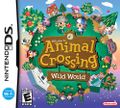
North American box art
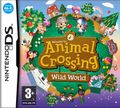
European box art
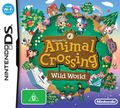
Australian box art
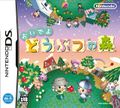
Japanese box art
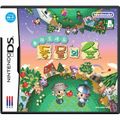
Korean box art


Trivia[edit]
- In the game, Able Sisters is always directly east of Tom Nook's store, but on the cover, they are separated.
- This game has the least amount of villagers in the Animal Crossing series, at 150.
- This game has the smallest town size in the series, at 16 acres.
Names in other languages[edit]
Unlike the previous game, the Welcome to part in the logo was not translated and was left in English in all Western versions.
|
|
おいでよ どうぶつの森 Oideyo Doubutsu no Mori |
Animal Forest: Come here |
|
|
놀러오세요 동물의 숲 Nolla Oseyo Dongmul-Ui Sup |
Animal Forest: Come in to Play |
Notes[edit]
References[edit]
- ↑ "おいでよ どうぶつの森". Nintendo. Retrieved November 16, 2020.
- ↑ "Nintendo :: Games :: Animal Crossing: Wild World". Nintendo of America. Archived from the original on January 27, 2008. Retrieved May 2, 2021.
- ↑ Nintendo Australia. "News from Nintendo". nintendo.com.au. Archived from the original on December 31, 2005. Retrieved August 17, 2021.
- ↑ 4.0 4.1 "Animal Crossing: Wild World". Nintendo of Europe. Retrieved November 16, 2020.
- ↑ Nintendo Korea. "놀러오세요 동물의 숲". nintendo.co.kr. Archived from the original on December 18, 2008. Retrieved March 19, 2021.
- ↑ "おいでよ どうぶつの森". Nintendo. Retrieved November 16, 2020.
- ↑ "Animal Crossing: Wild World for Wii U - Nintendo Game Details". Nintendo of America. Retrieved November 16, 2020.
- ↑ https://wiimmfi.de/
- ↑ Craig Harris (May 12, 2004). "E3 2004: Animal Crossing Goes DS". IGN. Retrieved November 15, 2020.
- ↑ IGN Staff (June 10, 2016). "Nintendo at E3 2005". Retrieved November 16, 2020.
- ↑ Craig Harris (May 18, 2005). "E3 2005: Animal Crossing DS Hands-on". IGN. Archived from the original on December 31, 2005. Retrieved November 16, 2020.
- ↑ Craig Harris (September 7, 2005). "Animal Crossing's New Brand". IGN. Archived from the original on December 30, 2005. Retrieved November 16, 2020.
- ↑ Wired Staff (April 7, 2006). "Interview: The Wild World of Katsuya Eguchi". Wired. Retrieved November 15, 2020.
- ↑ 14.0 14.1 IGN Staff (May 19, 2005). "E3 2005: Animal Crossing DS Interview". IGN. Archived from the original on December 31, 2005. Retrieved November 16, 2020.
- ↑ Nintendo Power Volume 181, page 40
- ↑ https://tcrf.net/Animal_Crossing:_Wild_World#Revisional_Differences
- ↑ 1.1 ROM build date: ROM2006-02-10 17:52:59 forest
- ↑ https://tcrf.net/Animal_Crossing:_Wild_World#Virtual_Console_Changesswers/detail/a_id/57847
- ↑ https://en-americas-support.nintendo.com/app/answers/detail/a_id/57847
- ↑ "Animal Crossing: Wild World for DS Reviews". Metacritic. Retrieved November 15, 2020.
- ↑ Craig Harris (December 5, 2005). "Animal Crossing: Wild World". IGN. Retrieved November 15, 2020.
- ↑ 22.0 22.1 Daniel Bloodworth (December 21, 2005). "Animal Crossing: Wild World". Nintendo World Report. Retrieved November 15, 2020.
- ↑ "IGN.com presents The Best of 2005". IGN. Archived from the original on December 30, 2005. Retrieved November 15, 2020.
- ↑ Josh Freund (December 1, 2005). "News - Japan: Weekly software sales for 11/21 - 11/27". GamesAreFun. Archived from the original on June 12, 2011. Retrieved November 15, 2020.
- ↑ "IR Information : Financial Data - Top Selling Title Sales Units - Nintendo DS Software". Nintendo.
- ↑ "Touch! Generations サウンドトラック". club.nintendo.jp. Archived from the original on January 19, 2010. Retrieved November 16, 2020.
- ↑ Mayor Mori (February 11, 2020). "Animal Crossing Wild World MILLEFEUI CARDS (Complete Collection & How To Use Them)". YouTube. Retrieved November 15, 2020.
External links[edit]
- Japanese website
- North American website (archived; requires Adobe Flash Player)
- European product page
- Korean website (archived)
| Animal Crossing series | ||||||||||||||
|---|---|---|---|---|---|---|---|---|---|---|---|---|---|---|
| ||||||||||||||